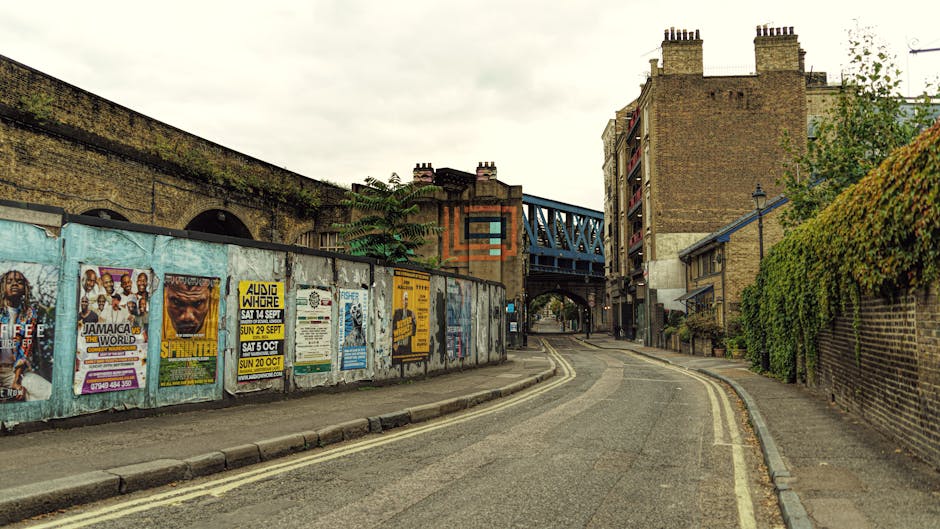
Man and van guide for New Kent Road access in Elephant and Castle
Posted on 19/06/2026

If you are planning a move around New Kent Road, the tricky bit is rarely the lifting. It is the access. Tight streets, busier traffic than you expected, awkward bay parking, and a van that needs to be placed just right can turn a simple job into a bit of a puzzle. This Man and van guide for New Kent Road access in Elephant and Castle is here to make that puzzle easier to solve.
Whether you are shifting a few heavy items, moving out of a flat, or arranging a larger home move, the key is to plan the approach before the van arrives. That means thinking about timing, loading points, building access, parking restrictions, and the sort of van that actually fits the job. Sounds simple. It usually is, once the basics are nailed down.
Below, you will find a practical guide to making New Kent Road access smoother, safer, and less stressful. We will cover what matters, how man and van jobs typically work in this part of Elephant and Castle, common mistakes to avoid, and the small details that often save the day. And yes, a couple of them are the sort of details people only notice after the sofa is stuck halfway out of the hallway. Not ideal.
- Why New Kent Road access matters
- How man and van access usually works
- Key benefits and practical advantages
- Who this is for and when it makes sense
- Step-by-step guidance
- Expert tips for better results
- Common mistakes to avoid
- Tools, resources and recommendations
- Law, compliance, standards, or best practice
- Options, methods, or comparison table
- Case study or real-world example
- Practical checklist
- Conclusion
- Frequently asked questions
Why Man and van guide for New Kent Road access in Elephant and Castle Matters
New Kent Road sits in a part of London where movement is constant. Delivery vehicles, buses, taxis, cyclists, pedestrians, and local traffic all compete for space. For a man and van job, that matters more than people sometimes realise. A van is not just a transport solution here; it is part of a timed, spatial, and practical access plan.
If access is ignored, even a short move can become slow and expensive. The van may have to park farther away than expected. Porters may need more time to carry items. A missed loading window can mean circling the area, waiting for a gap, or breaking a move into awkward stages. That is exactly the kind of thing that makes a cheap job not feel cheap at all.
In Elephant and Castle, good access planning also affects safety. Narrow pavements, building entrances, shared courtyards, and busy curbside activity all increase the need for care. In our experience, the smoothest jobs are the ones where the route in, the route out, and the loading point are all thought through before anyone touches a box.
This is also why local knowledge matters. A team that understands the rhythm of the area can judge where a van is likely to stop, how long loading may take, and whether a flat move needs extra hands. If you want to understand more about the wider service offer in the area, the services overview is a useful place to start.
How Man and van guide for New Kent Road access in Elephant and Castle Works
A man and van service is usually the flexible middle ground between doing everything yourself and booking a full-scale removal team. It is built for local or short-distance moves, single-item transport, student moves, small flats, or jobs where access is tight and you do not want a huge vehicle blocking the road for long.
For New Kent Road access, the process normally starts with a quick look at the property layout and the street conditions. Where will the van stop? Is there room to load at the kerb? Do you need a lift, stair carry, or two-person handling for heavier items? Are there any awkward bends, secure entrances, or time restrictions that need to be respected? Those are the questions worth asking early.
The actual workflow tends to be simple:
- Share your collection and delivery details.
- Explain the property type and access situation.
- List bulky or fragile items separately.
- Confirm the estimated carrying distance from door to van.
- Arrange arrival time around local traffic and loading conditions.
- Prepare items so loading can start immediately.
Some moves need just one load. Others need a couple of runs, especially if parking is limited or the property is on an upper floor. That is not a problem in itself. It just means the job should be planned like a small operation rather than a last-minute dash.
If your move involves furniture, the dedicated furniture removals service can be a better fit than trying to improvise on the day. The same is true for flat moves, where stairwells and building access often decide the pace more than the distance does.
Key Benefits and Practical Advantages
The biggest benefit of a well-planned man and van move near New Kent Road is control. You are not leaving the day to chance. You are reducing the number of variables that can go wrong, which is useful in a busy inner-London setting.
Here are the advantages that matter most:
- Better access planning: A smaller van and a simpler setup are often easier to fit into tight streets or awkward loading spaces.
- Lower stress: When timings, parking, and access are sorted, the move feels manageable rather than chaotic.
- More flexibility: Man and van services are usually well suited to smaller loads, short notice, and varied building layouts.
- Faster loading and unloading: With the right preparation, the team can work through the job without unnecessary delays.
- Cost efficiency: For modest moves, you may avoid paying for capacity you do not need.
There is also a practical comfort to keeping the job local. New Kent Road is the kind of location where a short journey can still feel like a serious logistical task if access is poor. The right service smooths that over. You notice it most when the van arrives, the items go straight on board, and the whole thing just keeps moving. Lovely when that happens, frankly.
For people who need same-day flexibility, the same-day removals option may be useful when timing is tight and access must be handled quickly.
Who This Is For and When It Makes Sense
This guide is especially useful if you are moving in or out of Elephant and Castle and you expect access on New Kent Road to influence the job. That includes renters, first-time movers, students, people downsizing, and anyone transporting furniture or boxed belongings from a flat or small house.
It also makes sense if:
- you have limited parking near your property;
- your items are bulky but not enough for a full removals crew;
- you are moving at short notice;
- you need a practical solution for stair access or carrying distance;
- you want a local move that does not overcomplicate things.
If you are moving between flats, the flat removals service is often a stronger fit because flat access usually adds extra planning around stairs, lifts, entry codes, and loading points. For larger household moves, a house removals service may be more appropriate.
Students in the area often use a man and van because it matches the scale of the move. A few boxes, a desk, a chair, bedding, maybe a bike or a small bookcase. Simple enough on paper, but only if access is handled properly. You do not want to be dragging a mattress down four flights because the van could not stop where you hoped. That gets old very quickly.
Step-by-Step Guidance
If you want the cleanest possible result, use a methodical approach. The job becomes much easier when you treat access as a checklist, not an afterthought.
- Confirm the exact pickup and drop-off points. Do not rely on vague street names alone. Make sure the driver knows which entrance, which side of the road, and which building access point you mean.
- Measure the awkward bits. Door widths, stair turns, lift size, and hallway corners can all matter. Even rough measurements help.
- Describe parking conditions honestly. If stopping near the door is difficult, say so. It is better to plan for a longer carry than to pretend the kerbside is straightforward.
- Separate fragile and heavy items. Keep glass, electronics, and soft furnishings organised so loading makes sense.
- Pack before the van arrives. The team should be lifting, not waiting while you tape up the last box. We have all seen that scene. No one enjoys it.
- Build in a small time buffer. Local traffic, building access delays, or a busy loading bay can steal ten minutes here and there.
- Confirm the plan on the day. A quick call or message before arrival can prevent small misunderstandings from becoming full-on delays.
One small but useful habit is to create a "first off the van" box. Put kettle, chargers, toilet roll, keys, and a basic toolkit in it. On a move day, that little box can feel like gold. A cup of tea and a working phone charger? Utter luxury.
Expert Tips for Better Results
Here is the bit people often skip: local access is not just about parking. It is about sequencing. Which item comes first? Which item blocks the path if it is left too long? Which entrance gives the shortest carry? These details seem minor until they save twenty minutes.
Tip 1: Treat the van space like a plan, not a pile. Heavy items should usually go in first, with lighter and more delicate items secured around them. That keeps the load stable and makes unloading easier at the other end.
Tip 2: Keep the route clear. If there is a narrow hallway, move loose items, door wedges, and clutter out of the way before the team arrives. It sounds obvious. Still worth saying.
Tip 3: Match the vehicle to the access. A smaller vehicle can be a better fit when the road is busy or stopping space is tight. A larger van may be efficient for volume, but not if it creates a parking headache.
Tip 4: Book packing help if you are rushed. The packing and boxes service can remove a lot of the pre-move pressure and improve protection for items in transit.
Tip 5: Ask about safety and insurance before the move. Proper handling matters. So does knowing your items are being transported with the right precautions. If you want to read more about this side of the service, the insurance and safety information is worth a look.
And one more thing: if you are moving around lunchtime or in the evening rush, expect the area to feel different. Traffic flow changes, crossings get busier, and a job that looked easy at 9am can become a slow shuffle later on. Timing really matters here.
Common Mistakes to Avoid
Most access problems are preventable. That is the frustrating part, but also the good news.
- Underestimating the carry distance. A "quick stop" can turn into a long wheel from van to flat entrance.
- Forgetting access codes or keys. This one causes more delays than people expect.
- Leaving packing until the last minute. The van cannot wait forever while loose items are stuffed into random bags.
- Assuming parking will be easy. In busy parts of Elephant and Castle, assumption is a risky hobby.
- Not flagging heavy or awkward items. Fridges, wardrobes, mirrors, and pianos need proper planning.
- Booking the wrong service level. A simple van run is not the same as a full removal job.
It is also common for people to forget disposal. If you are clearing out an old room or replacing worn furniture, it may help to combine the move with responsible item removal. The recycling and sustainability page explains the general approach used for unwanted items and reuse-minded handling.
Truth be told, the biggest mistake is usually trying to "wing it." London does not reward winging it. Not here.
Tools, Resources and Recommendations
You do not need a complicated toolkit to manage access well, but a few practical items make a surprising difference.
- Box labels: mark fragile, heavy, and priority boxes clearly.
- Measuring tape: useful for checking furniture, doors, and lift dimensions.
- Furniture blankets and straps: help protect larger pieces and keep them secure in transit.
- Phone flashlight: handy for dim stairwells or basement storage spaces.
- Folder or notes app: keep building access codes, contact numbers, and move details in one place.
For pricing clarity, the pricing and quotes page is useful if you want a better sense of what affects a quote. Access, carrying distance, item volume, timing, and service type all play a role. It is rarely just about miles.
If you are looking for a simpler service explanation, the man and van service and the man with a van option are both relevant starting points for understanding how the service is structured in Elephant and Castle.
Need something more substantial? A removal van may be better if you are carrying a larger load or want a vehicle sized more for removals than for light transport.
Law, Compliance, Standards, or Best Practice
For a local move, the main compliance concerns are usually practical rather than dramatic. The focus is on safe loading, suitable driving, lawful parking, and reasonable care for property and people. That said, best practice still matters a great deal.
In the UK, moving work should be carried out with attention to health and safety, secure loading, and responsible handling of goods. If a team is entering shared buildings or using stairwells, they should be thinking about avoiding damage, protecting flooring where appropriate, and not blocking exits or walkways for longer than necessary. Nothing glamorous, but absolutely essential.
For customers, it is sensible to check that the service explains its safety approach clearly. If a company has a published health and safety policy, that is a good sign that the basics are taken seriously. Likewise, a transparent terms and conditions page helps you understand what is included, what is not, and what happens if plans change.
There is also a trust element. A business that provides an accessible accessibility statement and a clear privacy policy usually signals a more organised operation overall. Not a guarantee, of course, but a helpful indicator.
If something goes wrong, it is reassuring to know there is a fair process in place. The complaints procedure explains how issues are handled, which is a sensible part of any professional service.
One more practical note: if you are unsure whether your building has restrictions or access rules, check with your landlord, building manager, or concierge before the move. That tiny bit of admin can save a lot of back-and-forth later.
Options, Methods, or Comparison Table
Different move types need different levels of support. Here is a straightforward comparison to help you decide what fits your situation.
| Option | Best for | Access considerations | Typical fit |
|---|---|---|---|
| Man and van | Small to medium local moves, single items, student moves | Good for tighter streets and flexible loading | Best when load size is moderate and access is the main challenge |
| Removal van | Larger loads that still need a streamlined service | Useful when you need more space and structured loading | Best when you have more furniture or boxed items |
| House removals | Whole-home moves | Better for multi-room access, larger crews, and heavier planning | Best when you are moving the contents of a full property |
| Flat removals | Apartment and estate moves | Built around stairs, lifts, and building entry points | Best for flats where access needs careful coordination |
If you are still weighing up the choice, the removal services page is a useful way to compare wider options in one place. That is often easier than trying to guess from the name alone.
Case Study or Real-World Example
Imagine a typical Thursday morning move from a second-floor flat near New Kent Road. The customer has a sofa, a bed base, a mattress, three boxes of kitchen items, two suitcases, and a small desk. Nothing outrageous, but enough to need sensible handling.
The first question is where the van can stop. If the kerb space closest to the entrance is busy, the team may need a slightly longer carry from a legal stopping point. That is fine, provided everyone knows it in advance. The customer leaves the boxes in one room, clears the hallway, and confirms building access before the team arrives. Simple. Effective.
When the van turns up, the larger pieces go in first, the mattress gets protected, and the smaller boxes fill the remaining space without crushing anything. Because the route inside the building was clear, loading is steady rather than stop-start. The job finishes without drama. No last-minute scramble, no panic because a bedside table will not fit through the door, no debate about whether the lift is big enough. Honestly, that is a good day's work.
What made it work? A realistic estimate of access, a bit of planning, and the right service size. Nothing fancy. Just proper preparation.
Practical Checklist
Use this checklist before your New Kent Road move day. It keeps things tidy and stops the usual little disasters.
- Confirm the full address, floor level, and exact entrance to use.
- Check whether there are parking or stopping restrictions.
- Measure any narrow doors, stair turns, or lift access.
- Identify fragile, heavy, and awkward items in advance.
- Pack and label all boxes before the van arrives.
- Keep access codes, keys, and contact numbers ready.
- Clear hallways and remove trip hazards.
- Choose the right service level for the amount of stuff you have.
- Set aside essentials you will need first at the new place.
- Allow a small buffer for traffic, parking, and building delays.
If your move is more complex, it can help to read a little about the company first. The about us page gives a better sense of the team and the way the service is presented, which is useful when you are comparing options.
Get a free quote today and see how much you can save.
Conclusion
Getting access right on New Kent Road is not about overthinking every detail. It is about being realistic, organised, and aware of how this part of Elephant and Castle actually works on the ground. A man and van move can be simple and efficient here, but only if the route, parking, loading point, and property access are considered before the day arrives.
That is the real value of planning. Less wasted time. Fewer surprises. Better protection for your belongings. And, just as importantly, a move that feels under control instead of slightly wild. You do not need perfection. You just need a clear plan and a service that understands local access properly.
If you are moving soon, keep things practical, ask the right questions, and give yourself enough time to do the job properly. It makes all the difference, really. One calm move beats three rushed ones, every time.